There's a feeling every Austin homeowner dreads: that moment your AC finally gives out during a sweltering summer afternoon. Is your air conditioner not cooling in Austin’s heat? While some problems are a quick fix, others are flashing neon signs that it’s time to start thinking about a replacement. Knowing when to replace your HVAC is key to avoiding sky-high energy bills and a constant cycle of expensive service calls.
As Scott MasterTch on JustAnswer, I’ve helped over 1,500 customers diagnose and fix appliance and AC issues remotely. As the founder of HomeWise Services, I offer Austin homeowners a unique $20 concierge service for personalized troubleshooting and white-glove repair scheduling. Need instant advice? Try JustAnswer for $5, but cancel within 7 days via ‘My Account’ > ‘Membership’ > ‘Cancel membership’ or contact [email protected] to avoid monthly fees. For local, hands-on support in Austin, book the HomeWise concierge service here.
Key Signs Your Austin HVAC Is Failing
When your central air system is on the verge of a total breakdown, it rarely happens without warning. It usually drops hints first. Learning to spot these clues can save you the massive headache and expense of an emergency AC repair in Austin.
As an expert on JustAnswer, I’ve helped homeowners across the country pinpoint these exact issues. For example, I recently helped a user in minutes figure out why their system was blowing warm air—a classic symptom. Here in Austin, my company, HomeWise Services, offers a $20 concierge service for that local, hands-on diagnosis when you need it most.
If you're noticing any of the following signs, your system is likely waving a white flag.
Strange Noises and Foul Odors
Your HVAC system should be a quiet workhorse, humming along in the background. When new, persistent noises start popping up, it's a serious red flag.
- Grinding or Squealing: These sharp, high-pitched sounds often mean bad news for your motor, pointing to failing bearings or a worn-out fan belt.
- Banging or Rattling: This is a mechanical cry for help. It could be a loose part like a connecting rod or piston pin, which can cause catastrophic damage if left to rattle around.
- Musty Smells: That "dirty sock" smell is a classic sign of trouble. A persistent musty or moldy odor means moisture and potential bacterial growth are lurking in your coils or ductwork, which is terrible for your home's air quality.
Inconsistent Temperatures and Weak Airflow
Is your living room an icebox while your bedroom feels like a sauna? That kind of uneven cooling is a textbook symptom of a system that's losing the fight.
When your HVAC can no longer push air effectively, it might be due to a failing compressor or major issues in your ductwork. You can perform some DIY AC repair tips like checking your air filter, but if the problem persists, the issue is deeper. A struggling system forces the unit to work overtime just to keep up, which leads directly to our next big warning sign.
Rising Energy Bills
This one hits you right in the wallet. One of the most undeniable signs of a failing HVAC system is a sudden, unexplained spike in your utility bills.
As critical components wear down, your unit’s efficiency plummets. It has to run longer and harder just to hit the temperature on your thermostat. This decline is especially dramatic in older units that are already behind the curve on modern efficiency standards.
HVAC systems are built to last 10 to 20 years, but their performance and reliability drop off sharply with age. Statistically, once a unit hits the 15-year mark, you can expect annual repair costs to climb significantly.
If your energy bills are going up while you're constantly calling for service, you're likely paying a premium to run an obsolete system. Getting a clear picture of your unit's health is the first step, and our team is always ready to provide expert AC repair in Austin, TX and give you honest, straightforward advice about your replacement options.
HVAC Replacement Warning Signs at a Glance
Use this table to quickly assess your HVAC system's health. These are the most common signs Austin homeowners experience before a total system failure.
| Warning Sign | What It Means for Your System | Recommended Action |
|---|---|---|
| Strange Noises | Grinding, squealing, or banging points to failing mechanical parts like motors or bearings. | Call for an immediate inspection to prevent catastrophic failure. |
| Rising Energy Bills | A sudden spike in your monthly utility costs indicates a severe loss of efficiency. | Compare repair costs to potential savings from a new, high-efficiency unit. |
| Weak Airflow | Your system is struggling to circulate air, likely due to a failing blower or ductwork issues. | Check your filter first, then call a pro if the problem persists. |
| Frequent Repairs | If you have your HVAC tech on speed dial, the unit's components are likely failing in a domino effect. | Stop sinking money into an old system. Start budgeting for a replacement. |
| System Age | If your unit is over 15 years old, it's running on borrowed time and outdated technology. | Proactively get replacement quotes before it fails on the hottest day of the year. |
Seeing one of these signs might just mean you need a repair. But if you're checking off multiple boxes on this list, it's a strong signal that a full replacement is on the horizon.
How Long Should Your HVAC System Really Last?
You’ll hear it all the time: an HVAC system should last somewhere between 10 to 20 years. That’s a decent starting point, but honestly, it’s about as useful as saying a car lasts for 100,000 to 200,000 miles. The real-world lifespan hinges entirely on the quality of the brand, how well it was installed, and, most importantly, its maintenance history.
Think of it this way: a premium HVAC system that gets regular, professional tune-ups is like a well-cared-for luxury car. With consistent oil changes and expert service, it’s going to run smoothly and efficiently for a long, long time. On the flip side, a budget model that was slapped in by a careless installer and then neglected is destined for an early grave, especially under the brutal strain of an Austin summer.
Functional Lifespan vs. Economic Lifespan
This is a critical distinction that most homeowners miss. There's the life of the machine, and then there's the life of your wallet.
- Functional Lifespan: This is simply how long the unit will turn on and make cold or hot air. It might be loud, wildly inefficient, and about as reliable as a flip of a coin, but it technically still works.
- Economic Lifespan: This ends the second it costs you more to keep the old clunker running than it would to invest in a new system. This isn't just about repair costs; it's about those sky-high energy bills that sneak up on you month after month.
Too many people wait until their system dies completely—usually on the hottest day of the year. The smart move is to consider when to replace your HVAC the moment its economic lifespan is over, even if it still has a few years of functional life left in it.
A JustAnswer Story: The Tale of a Shoddy Installation
I once helped a homeowner on JustAnswer who was at their wit's end with a "failing" 8-year-old AC unit. They were convinced they had bought a lemon and were ready to drop thousands on a replacement. After walking them through a few diagnostic checks, we found the real culprit.
The original installation was a complete hack job. The ductwork was sized all wrong and poorly sealed, forcing the unit to work twice as hard for its entire life. The system wasn't "old"—it had been run into the ground by a bad installation. It's a perfect example of a critical truth: a fantastic HVAC system can be ruined from day one if it isn’t installed by a true professional.
An HVAC system's longevity is a direct reflection of its installation and upkeep. A high-quality installation can add years to your unit's life, while a poor one can cut it in half, turning a 15-year system into a 7-year problem.
Before you just assume your unit is on its last legs due to age, you need an expert opinion. For just $20, the HomeWise Services concierge can provide that crucial diagnosis, helping you figure out if you're dealing with old age or the ghost of a bad install. It's a small step that ensures you make a smart financial decision based on facts, not frustration.
The Real Cost of Repairing Versus Replacing
Deciding between a major repair and a full system replacement is one of the toughest calls a homeowner has to make. It can feel like a gamble. Do you sink a chunk of cash into a temporary fix, or do you bite the bullet on a significant investment?
To take the emotion out of it, I walk homeowners through a simple calculation I call the “5,000 Rule.” It’s a quick gut check that helps put the cost of a repair into perspective against the age of your system.
The 5,000 Rule Explained
The formula is dead simple. Just take the quoted repair cost and multiply it by how old your HVAC unit is.
Repair Cost ($) x Age of Unit (Years) = Your Number
If your number is over $5,000, it’s a pretty strong sign that replacement is the smarter financial move. Pouring good money into an old, failing system often just starts a frustrating cycle of one repair after another. That same money could be the down payment on a brand-new system that's reliable, efficient, and comes with a warranty.
Let's run a real-world Austin scenario. Your 12-year-old AC needs a new compressor, and the quote is $600.
Using the rule, we get: $600 (Repair Cost) x 12 (Years Old) = $7,200
That $7,200 is way over the $5,000 mark. This tells you that putting another $600 into a 12-year-old machine is likely a bad bet. You're better off putting that money toward a system that will give you peace of mind and lower energy bills for years to come. Often, the signs of aging, like rust and leaks, go hand-in-hand with these big repair bills.
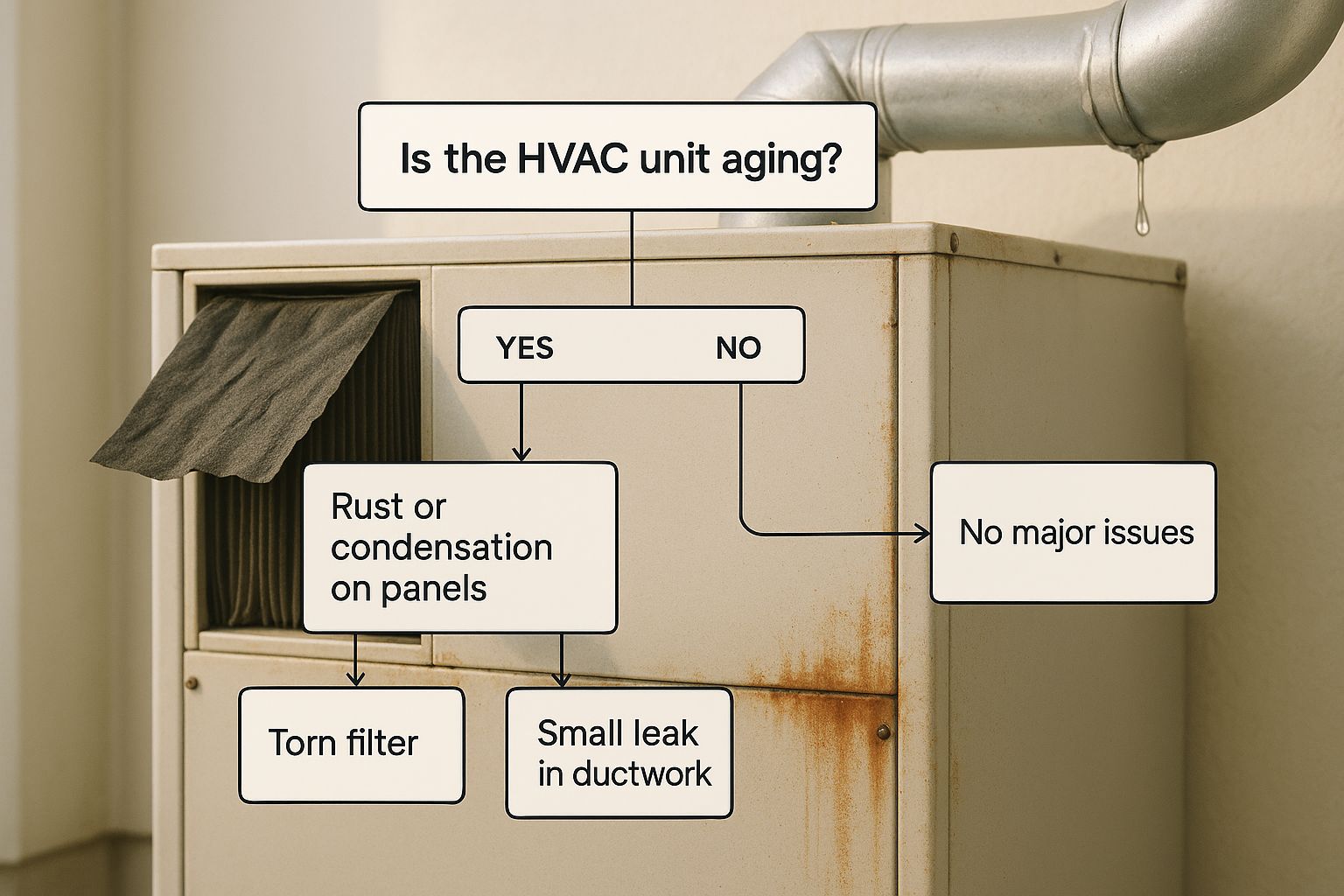
When you see this kind of decay, it's a visual cue that the internal components are likely just as worn out, making the 5,000 Rule an even more critical guide.
Your Trusted Advisor in Austin
This is where the HomeWise Services $20 concierge offering becomes so valuable. Instead of trying to figure this out on your own, I'll personally help you break down the repair quotes and run the numbers. My job is to be your advocate and find the most cost-effective solution for your home.
We'll look at the quote, your system's age, and its repair history to make an objective decision together. Sometimes a simple, inexpensive fix makes perfect sense. But if you're looking at a major component failure on an older unit, you need an honest expert in your corner. While we're talking about HVAC here, this principle of smart, informed repairs applies to all your home's systems. You can see more on our approach in our guide to plumbing repair in Austin, TX.
Don’t let a sales-driven repair tech pressure you into a decision. For a small, flat fee, you get an expert who can guide you toward spending your money wisely, whether that’s on a strategic repair or a long-term replacement.
It's easy to look at a new HVAC system as just another big-ticket household expense. But that’s a pretty common mistake. A much smarter way to think about it is as a powerful investment in your home’s efficiency—an upgrade that actively starts paying you back from day one.
Figuring out when to replace an HVAC unit isn't just about dodging future repair bills. It's about grabbing an opportunity to slash your monthly energy costs, especially here in Austin where our air conditioners are putting in serious overtime for a good chunk of the year. Older, outdated systems are absolute energy hogs, but today's high-efficiency units are designed to just sip electricity, which leads to some serious savings.
Understanding SEER and Your Savings
As you start looking at new air conditioners, you'll run into the term SEER right away. It stands for Seasonal Energy Efficiency Ratio, and the easiest way to think of it is like a car's MPG. The higher the SEER number, the less energy the unit needs to cool your home. It’s that simple.
Systems from 10 or 15 years ago might have a SEER rating of 10, maybe even lower if they weren't well-maintained. Today, the minimum standard is significantly higher, with top-tier models boasting ratings of 16, 18, or even 20 and beyond.
Upgrading from an old 10 SEER unit to a modern 16 SEER system can slash your annual cooling costs by up to 30-40%. For a typical Austin homeowner, that can mean hundreds of dollars back in your pocket every single summer.
This isn't just happening in a vacuum. The entire HVAC industry is shifting. The U.S. HVAC market was a massive $123 billion industry in 2023, and a big part of that growth is from homeowners upgrading. In fact, U.S. heat pump sales jumped by 32% recently, largely because financial incentives are making these energy-efficient systems more attractive than ever. You can learn more about how federal incentives are shaping the industry and creating real benefits for homeowners.
Upgrading your HVAC is a great way to save money, and it's helpful to see what those savings might look like. The table below breaks down the potential annual energy savings you could see by moving from an older, less efficient unit to a new high-SEER system in our Austin climate.
SEER Rating and Potential Energy Savings Comparison
| Old Unit SEER Rating | New Unit SEER Rating | Potential Annual Energy Savings (%) | Estimated Annual Savings (Austin Climate) |
|---|---|---|---|
| 10 SEER | 16 SEER | Up to 38% | ~$450 – $600 |
| 10 SEER | 18 SEER | Up to 44% | ~$520 – $700 |
| 12 SEER | 16 SEER | Up to 25% | ~$300 – $400 |
| 12 SEER | 18 SEER | Up to 33% | ~$390 – $530 |
| 14 SEER | 20 SEER | Up to 30% | ~$350 – $480 |
As you can see, the jump in efficiency translates directly into real dollars. The more significant the upgrade in SEER, the faster the new system begins to pay for itself through lower utility bills.
How Federal Incentives Lower Your Upfront Cost
One of the biggest nudges to make the switch right now is the availability of federal incentives. Programs born out of the Inflation Reduction Act are offering homeowners some pretty substantial tax credits and rebates when they install qualifying high-efficiency equipment, like modern heat pumps and central air conditioners.
These programs were specifically designed to make energy-efficient technology more affordable for everyone, effectively knocking a chunk off the initial price tag of a new system. When you stack these government perks on top of the long-term energy savings, the financial case for upgrading becomes almost undeniable.
A new system doesn't just make your home more comfortable or add to its resale value—it starts actively trimming your monthly bills the moment it’s turned on. It’s a strategic home improvement that just makes good sense, both financially and practically.
Your Dual-Path Solution for Austin HVAC Problems
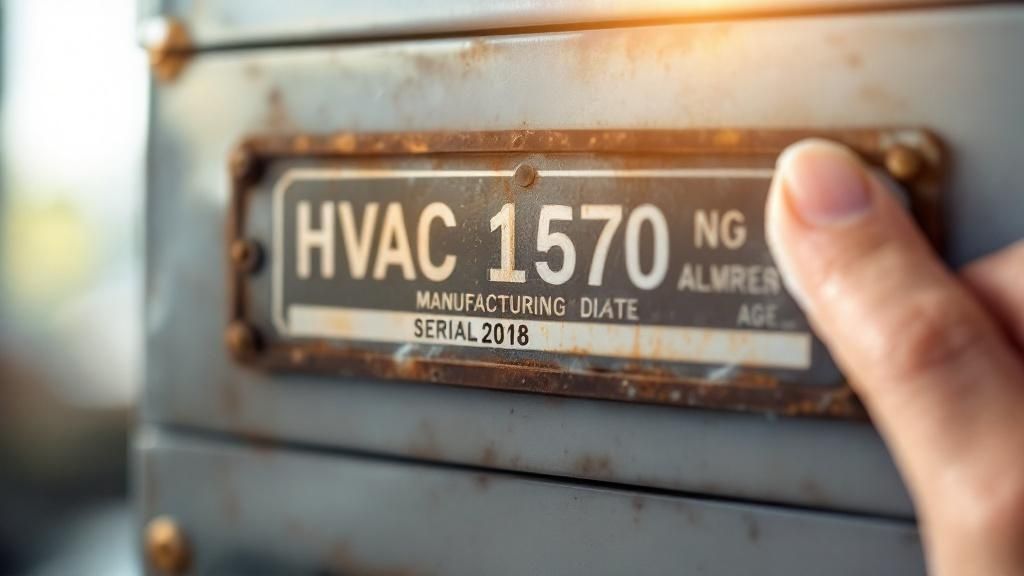
When your AC dies in the middle of an Austin summer, you don't have time to waste. You need help, and you need it fast. The good news? You've got options, and I’ve set things up so you can get exactly the kind of home repair advice in Austin that you need, right when you need it.
I've created two clear paths for you. One is perfect if you like to roll up your sleeves and figure things out yourself. The other is for when you just want a trusted professional to make the problem disappear. Think of it as having an expert in your back pocket, ready to either guide you or take the reins completely.
Path 1: Get Instant Expert Advice on JustAnswer
For those times when you just need a quick answer or a reliable second opinion, your first and fastest option is JustAnswer. For a small trial fee, you get to connect directly with me, Scott MasterTch, and get professional HVAC advice in minutes. This is a game-changer for a few common situations:
- DIY Troubleshooting: I can walk you through safe, simple diagnostic steps to figure out what's wrong. I’ve helped over 1,500 people solve appliance and home repair issues this way, and we can often get to the bottom of it without a service call.
- Quote Verification: Did another company give you a quote that feels way too high? Let's review it together. I'll give you an unbiased, expert opinion on whether the proposed repair and cost are fair.
- Parts Recommendations: If you're ready to tackle a repair yourself, I can help you pinpoint the exact AC part you need. This saves you the headache and cost of buying the wrong component. Find the best appliance parts in Austin from suppliers like RepairClinic or Sears PartsDirect.
My goal on JustAnswer is to empower you with knowledge. For a small fee, you can make informed decisions, potentially saving hundreds on an unnecessary service call.
If you're ready for fast, remote help, you can connect with me, Scott MasterTch, on JustAnswer right now. Try JustAnswer for $5, but cancel within 7 days via ‘My Account’ > ‘Membership’ > ‘Cancel membership’ or contact [email protected] to avoid monthly fees.
Path 2: Book White-Glove Service with HomeWise Concierge
If your HVAC problem is more than a simple DIY fix, or if you'd rather have a pro handle it from start to finish, the HomeWise Services $20 concierge service is your go-to local Austin solution. This service was designed to bridge the gap between getting online advice and having an expert physically show up at your door.
Here’s how it works: For a $20 flat fee, I become your personal HVAC consultant. It all starts with a phone call where we troubleshoot the issue. From there, I put my local network and expertise to work for you.
- Diagnose the Problem: We’ll work together to get to the root cause of the issue.
- Recommend Parts: I’ll identify the specific parts needed and can point you toward trusted suppliers.
- Schedule a Pro: I will personally arrange for a vetted, trusted, and highly skilled local technician to come to your home and perform the repair with white-glove service.
This concierge approach takes all the stress and guesswork out of the equation. You get a dedicated expert managing the entire process, ensuring the job gets done right the first time. Got a quick fix on JustAnswer? Let HomeWise handle complex repairs in Austin.
Ready for a seamless repair experience? You can book the HomeWise Services $20 concierge service directly online. It’s the easiest way to solve your HVAC problems in Austin.
Your Next Steps to a Comfortable Home

Okay, you've made it this far, which means you're well on your way to making a smart, confident decision about your home's HVAC system. You've learned about the warning signs of a failing unit, how to weigh repair costs against a full replacement, and why modern, high-efficiency systems are such a game-changer for your energy bills.
The most important takeaway? You don't have to figure this all out by yourself. Whether you need some quick, expert advice from me over at JustAnswer or you'd prefer personalized, on-the-ground support right here in Austin through the HomeWise $20 concierge service, help is right around the corner.
Let's take that next step toward making your Austin home the comfortable, efficient sanctuary it should be. You can check out our complete range of home solutions over at the HomeWise Services website. A portion of all HomeWise proceeds supports the Texas Amputee Golf and Wellness Foundation (@TAGWFSA).
Choose Your Path to a Solution
- For Instant DIY Help: Get fast, remote help from me on JustAnswer. Click here to connect with Scott MasterTch. Try JustAnswer for $5, but cancel within 7 days to avoid monthly fees.
- For Local Austin Service: Book the HomeWise $20 concierge service. We’ll provide white-glove troubleshooting and get a professional repair scheduled for you. Click here to book your concierge call.
Frequently Asked Questions About HVAC Replacement
When you're facing a major home repair like an HVAC replacement, it’s completely normal to have a lot of questions. My goal here is to give you clear, straightforward answers to some of the most common concerns Austin homeowners have, so you can feel confident in your next steps.
Can I fix my AC myself?
Absolutely, for some issues. Simple tasks like cleaning or replacing air filters, checking your thermostat settings, and clearing debris from your outdoor unit are great DIY AC repair tips. However, for complex problems involving refrigerants or electrical components, it's safer and more effective to seek expert help. You can start with a remote diagnosis on JustAnswer with me, Scott MasterTch, or book our HomeWise concierge service for professional local support.
How do I avoid JustAnswer fees?
JustAnswer offers a trial for a small fee (e.g., $5) so you can get immediate expert help. If you don’t wish to continue with the monthly membership, you must cancel your trial within 7 days. You can do this by logging into your account, going to "My Account," then "Membership," and selecting "Cancel membership." You can also email their support at [email protected] to process the cancellation.
Does the HomeWise Twenty Dollar Concierge Fee Go Toward the Repair?
That's a great question. The $20 fee is a separate charge for my dedicated time and expertise as your personal repair consultant. For that flat fee, you get a full consultation, professional troubleshooting over the phone, parts recommendations, and white-glove scheduling of a vetted, trusted local technician in Austin. The value is in ensuring you get an accurate diagnosis and a fair price, which often saves you far more than the initial $20.
For personalized troubleshooting and white-glove repair scheduling in Austin, book the HomeWise Services $20 concierge. Book your expert consultation now.
 HomeWise Services by Master Tech Scott
Leave a comment