When your apartment AC dies in the middle of a brutal Austin summer, it's more than just an inconvenience—it's a nightmare. The temperature inside starts climbing, and panic sets in. But before you start frantically searching for your landlord's number, take a breath. Many common AC problems can be figured out with just a few quick checks.
My name is Scott MasterTch. As an expert on JustAnswer with over 1,500 questions answered and founder of HomeWise Services, I’ve walked countless Austin homeowners and renters through this exact situation. For immediate help, you can try JustAnswer for $5, but be sure to cancel within 7 days to avoid monthly fees. For local, white-glove support here in Austin, HomeWise’s $20 concierge service offers expert diagnostics and repair scheduling. This guide is your first-response plan to find out what’s wrong and what your next move should be.
Your Austin Apartment AC Is Out: What Now?
Feeling the heat rise in your apartment is stressful, but having a clear plan makes all the difference. The first thing you need to do is a safe initial inspection to gather some clues.
Is the unit completely silent, or is it making strange noises? Is it blowing any air at all, even if it's warm? Just answering these simple questions can immediately help narrow down the potential culprits.
I’ve guided renters through these initial checks thousands of times, both online and right here in Austin. This process gives you the power to either fix the issue yourself (if it's a simple one) or give your property manager a clear, accurate report of the problem.
The First Things to Check
Before you make that call, run through these basic checks. They are completely safe for renters to do and often uncover the root of the problem surprisingly quickly.
-
Check the Thermostat: First, make sure it’s set to “Cool” and the temperature is at least 5 degrees below the current room temperature. You’d be amazed how many service calls I've seen resolved with this one simple step. If the display is blank, it might just need new batteries.
-
Inspect the Circuit Breaker: Head over to your apartment's electrical panel and look for the breaker labeled "AC" or "HVAC." If it’s tripped (stuck in the middle or "Off" position), flip it firmly to "Off" and then back to "On." If it trips again right away, do not reset it again. This signals a more serious electrical issue that needs professional attention.
-
Examine the Air Filter: A clogged air filter is the #1 cause of AC failure I see. It chokes the system, restricting airflow and forcing it to work way too hard. This is a common issue in Austin due to dust and pollen. This can lead to weak or warm air, and can even cause the unit to freeze up entirely. Find the filter (usually in a slot on the indoor unit), slide it out, and hold it up to a light. If you can't see light through it, it's long overdue for a change.
Expert Insight: I once helped an Austin renter on JustAnswer who was convinced their entire AC unit was dead. After a few questions, we discovered a filter so clogged it had caused the evaporator coils to turn into a solid block of ice. A new filter and a few hours of thawing saved them a hefty—and totally unnecessary—repair bill.
To help you run through these checks methodically, I've put together a quick-reference table. This is your go-to checklist for a safe, initial diagnosis.
Quick AC Troubleshooting Checklist for Apartment Renters
This table will help you perform some initial checks safely before you need to call your landlord or a professional.
| Area to Check | What to Look For | What It Means and Your Next Step |
|---|---|---|
| Thermostat | Blank screen, incorrect setting ("Heat" or "Fan Only"), or wrong temperature. | Next Step: Replace the batteries if the screen is blank. Ensure it's set to "Cool" and the target temp is 5+ degrees below the room temp. |
| Circuit Breaker | A flipped or "tripped" breaker in your electrical panel (usually in a closet or hallway). | Next Step: Firmly flip it to "Off," then back to "On." If it trips again immediately, STOP and call your landlord. This is an electrical fault. |
| Air Filter | A filter that's gray, fuzzy, and clogged with dust and debris. You can't see light through it. | Next Step: This is the most common problem. Contact your landlord for a replacement filter immediately. A dirty filter can cause the system to freeze up. |
| Vents & Registers | Closed or blocked vents in any rooms. Furniture, rugs, or boxes obstructing airflow. | Next Step: Open all vents fully. Move any items that are blocking them to allow for proper air circulation throughout your apartment. |
| Outdoor Unit (Visual Only) | Debris like leaves, grass clippings, or trash packed around the outside unit. | Next Step: DO NOT touch the unit. Simply note the obstruction and report it to your landlord. Blocked outdoor units can't release heat and will shut down. |
Using this checklist can give you the confidence to know what's happening with your system. Often, the fix is simple and something you or your landlord can handle in minutes.
For just $20, my HomeWise concierge service offers personalized troubleshooting over the phone, specifically for Austin locals. I'll walk you through these steps and more. Or, for instant text-based advice, you can chat with me directly on JustAnswer. Let's figure out what your AC is trying to tell you.
Common Apartment AC Problems and What's Behind Them
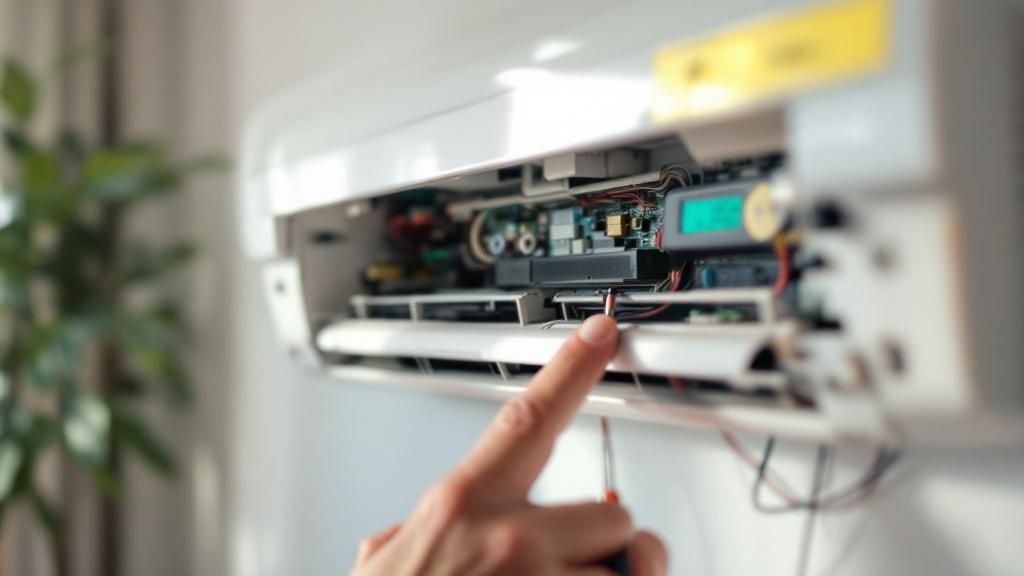
To fix your AC, you first have to know why it failed. After years of handling JustAnswer sessions and local service calls here in Austin, I’ve seen the same handful of problems pop up time and time again. If you can spot these, you’ll be able to explain the issue perfectly to your landlord or a technician.
It's no surprise these systems are under stress. The global air conditioning market is set to blow past $268.9 billion by 2034, mostly because of more people moving into cities and, well, it's getting hotter. This boom means a massive demand for AC in apartments, making maintenance more critical than ever. You can dig deeper into these air conditioning market trends in recent reports.
All this demand puts a real strain on apartment AC units. Let's walk through the most common culprits I see on the job.
The Overlooked Air Filter
I know I've said it before, but a clogged air filter is, without a doubt, the number one offender. Think of it like making your AC try to breathe through a thick, dusty blanket. It just suffocates the airflow, which makes the whole system work overtime, leading to weak cooling and sky-high energy bills.
When that airflow gets bad enough, the moisture that should be dripping off the evaporator coil has no place to go. It freezes right on the coil. Pretty soon, the whole thing is just a solid block of ice.
A Real-Life JustAnswer Case: I once helped an Austin renter who was convinced their unit was dead. It made a faint humming sound but wouldn't blow any air. After I asked a couple of questions, I had them pull out the filter. It was practically a solid brick of dust. The unit wasn't broken—it was frozen solid. A new filter and a few hours of thawing saved them a very expensive and totally unnecessary service call.
Faulty Thermostats and Bad Signals
Your thermostat is the brains of the entire operation. If it starts acting up, it can send bad signals to your AC unit, or sometimes no signal at all. This can happen for simple reasons like dead batteries or loose wiring, or because the sensor itself has finally given up.
The result is always frustrating: the AC won't kick on, refuses to shut off, or just cycles on and off randomly.
Clogged Condensate Drain Lines
Here in Austin, the humidity is no joke. Your AC works hard to pull all that moisture out of the air, and it funnels the water away through a little pipe called a condensate drain line. Over time, that damp, dark pipe becomes a perfect breeding ground for algae, mold, and general gunk.
Eventually, it clogs. When that happens, the water backs up into the drain pan inside your unit. Most modern apartment ACs have a float switch that will automatically shut down the entire system to stop a flood. If your AC just quits on you and you notice water pooling around the indoor unit, a clogged drain line is the most likely suspect.
These problems are incredibly common, but knowing what to look for can help you decide when it's time to call in a pro for appliance repair in Austin, TX. Armed with this knowledge, you can tackle the situation with confidence.
Alright, you've got a good idea of what's going on with your AC. Now, let's talk about what you can actually do about it. As a renter, you need to be smart about what you tackle yourself, but there are a handful of safe and surprisingly effective fixes that can solve the most common AC meltdowns.
These are the exact same steps I walk people through every day on JustAnswer. Trust me, getting these right can save you a ton of hassle and the awkwardness of calling maintenance for a simple issue.
The Most Important Task: Cleaning Your Air Filter
I'm not exaggerating when I say this: the single most effective thing you can do for your AC is to check the air filter. A dirty, clogged filter is the culprit behind at least 50% of the cooling problems I see. It's simple, really. When the filter is packed with dust, your system can't breathe. It struggles to pull in air, works way too hard, and often freezes up completely.
This is the domino effect I see all the time:
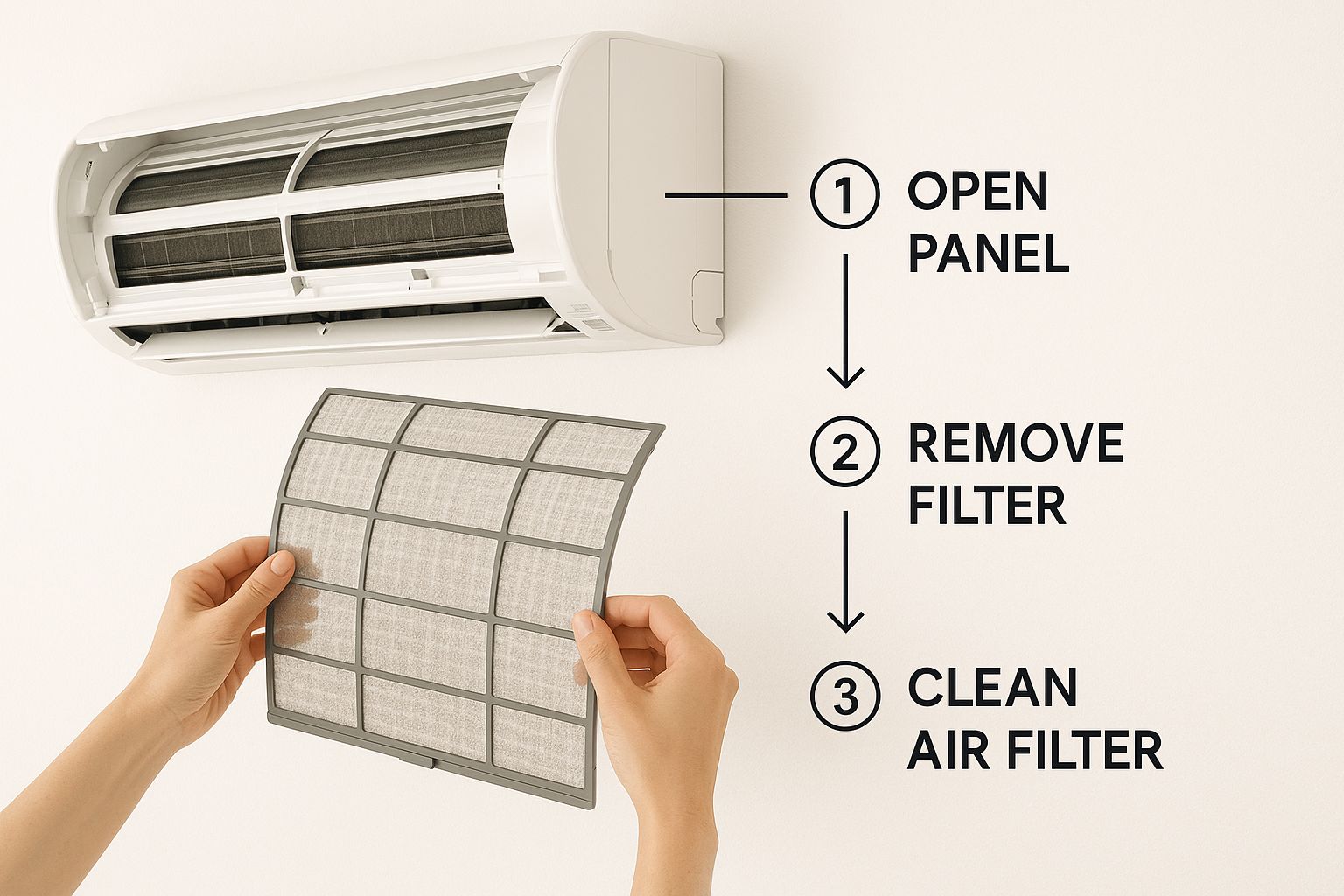
As the infographic shows, that dirty filter is the first domino. It directly causes poor airflow, which leads straight to a frozen system. The good news? The fix is often as easy as sliding out the old filter and popping in a new one. It can literally take minutes to get your cool air flowing again.
Clearing the Condensate Drain Line
Here in Austin, the humidity means our AC units are constantly pulling water out of the air. That water has to go somewhere, and it exits through a small PVC pipe called the condensate drain line. Over time, this little pipe can get clogged with algae and other gunk. When that happens, the water backs up, hits a safety float switch, and shuts your entire system down to prevent a nasty flood.
You can often clear minor clogs yourself without much trouble.
- First, find the line. Look for the PVC pipe coming out of your indoor air handler unit.
- Grab a wet/dry shop vac. Take the vacuum to the end of the drain line (usually located outside your apartment) and connect the hose. Use your hand or a rag to create a good seal and let it run for about a minute. This suction is usually enough to pull the blockage right out.
- For prevention, use tablets. You can buy condensate pan tablets and drop them into the drain pan inside. They dissolve slowly and help stop algae from building up in the first place.
Gently Clean the Outdoor Condenser Fins
Take a look at your outdoor unit, the condenser. See all those delicate metal fins? Their job is to release all the heat your AC has pulled out of your apartment. But over the year, they get caked with dirt, grass clippings, and that fluffy cottonwood stuff. This layer of grime traps heat and makes your unit work much harder than it needs to.
First things first: shut off the power to the unit at the circuit breaker. This is a critical safety step.
Once the power is off, just use a regular garden hose to gently spray the fins. The key is to spray from the inside of the aunit out, pushing all the debris away. Whatever you do, do not use a pressure washer. It’s way too powerful and will bend those fragile fins, causing a much bigger problem. A light, gentle spray is all you need to see a real improvement.
A Note on Parts: What if you find out the problem is something simple, like a bad thermostat? You can often find a replacement part yourself. For sourcing reliable components, I usually point people to a trusted supplier. A site like RepairClinic is a great place to find the exact model you need for your system.
These are the fixes you can confidently and safely try. If you've done all this and your apartment still feels like a sauna, it’s a clear sign that the problem is more serious and it's time to let a professional take over.
When AC Problems Are Beyond a DIY Fix
So, you’ve done everything right. You cleaned the filter, you made sure the drain line is clear, and you even checked the circuit breaker. But your Austin apartment is still an oven. When basic troubleshooting doesn’t move the needle, it’s a strong signal that you’re dealing with something more serious.
At this point, it's time to put the tools down. Certain AC issues are strictly for licensed professionals, and trying to tackle them yourself isn’t just dangerous—it could get you in hot water with your landlord and violate your lease. Knowing what to listen for will help you describe the problem accurately when you call for help.
Identifying Major AC Component Failures
The heart of your air conditioner is the compressor. It’s the workhorse that pumps refrigerant through the system to generate cold air, and it's also the most expensive part to replace. The good news? A failing compressor usually doesn't go quietly.
Head outside to your condenser unit and listen for these tell-tale sounds of a dying compressor:
- Loud Banging or Clanking: This is a terrible sound. It often means a part inside the compressor, like a piston or connecting rod, has broken loose and is getting thrown around.
- A High-Pitched Squeal or Screech: This sound can indicate dangerously high pressure inside the compressor. It's a serious safety hazard, so shut the unit off immediately.
- Rumbling or Shaking on Startup: If the unit violently shakes and rumbles when it tries to kick on, the compressor is struggling and likely on its last legs.
The global compressor market is enormous—valued at around USD 30.03 billion and expected to climb to USD 48.92 billion by 2035. This is driven by the constant need to replace units that fail from mechanical wear or electrical issues. If you want to dive deeper into the industry data, you can discover more insights about air conditioning compressor trends here.
The Truth About Refrigerant Leaks
Ever hear someone say their AC just needs a "recharge" or a "top-off"? That's a huge red flag. Your AC is a closed-loop system, meaning refrigerant shouldn't just "get used up." If it's low, there's a leak somewhere. Period.
Just adding more refrigerant is like putting air in a tire with a nail in it. It’s a temporary fix that wastes money and releases harmful chemicals into the environment. A true professional will find and repair the leak first—a job that requires an EPA certification and specialized tools.
Expert Tip: If a technician suggests adding refrigerant without performing a detailed leak test, you should be skeptical. A proper, lasting repair involves finding the leak, fixing the coil or line, and then charging the system back to the manufacturer's exact specifications.
Common Electrical Faults
Beyond a simple tripped breaker, a few other electrical components are common culprits when an AC unit dies.
- Failed Capacitor: Think of the capacitor as a small battery that gives the fan and compressor motors the jolt they need to start. A classic sign of a bad capacitor is a humming or clicking noise from the outdoor unit, but the fan never starts spinning. While the part itself isn't expensive, it holds a powerful electrical charge even with the power off. Need a new capacitor? You can find one at RepairClinic. This is a job for a pro, not a DIY project.
- Burnt Contactor: The contactor is an electrical switch that sends high voltage to the compressor and condenser fan. With age and use, the metal contact points can get pitted and burnt, preventing power from getting where it needs to go.
Recognizing these symptoms helps you understand that the problem is no longer a simple fix. It's time to call for professional AC repair in Austin and let an expert handle it safely.
Your Expert Support Options in Austin
You’ve tried the DIY tips, but your AC is still just blowing warm air. I get it, it's frustrating. But this is the moment when calling for backup is the smartest move. The good news is, you've got two great options in Austin, each built for a different need.
For Instant, Remote Diagnostics on JustAnswer
Before committing to a service call, let's get an expert diagnosis remotely. On JustAnswer, I’m Scott MasterTch, and I've personally helped over 1,500 people solve their AC headaches via live chat. It’s like having an expert on call. We can pinpoint the problem together before anyone sets foot in your apartment. Got a quick fix on JustAnswer? Let HomeWise handle any complex repairs in Austin.
Why JustAnswer First? For a small trial fee, you and I can figure out what's wrong. You'll know if it's a simple part you can ask your landlord for or if it's a more serious issue that truly needs a pro. It's the fastest way to get clarity.
Ready to get to the bottom of it? Get one-on-one help from me on JustAnswer now. (Reminder: This is a $5 trial offer for new users. Cancel within 7 days via "My Account" > "Membership" > "Cancel membership" or contact [email protected] to avoid monthly fees.)
HomeWise Services: The Local Austin Advantage
If you're in Austin and need hands-on help, my HomeWise Services’ $20 concierge service is the perfect next step. It's the bridge between a frustrating DIY afternoon and an expensive, full-blown repair visit.
Here’s how it works:
- Personalized Phone Diagnostics: For just $20, I'll personally get on the phone with you to troubleshoot your AC and determine the cause.
- Exact Part Recommendations: If a part is the problem, I’ll tell you exactly which one you need and where to get it from trusted suppliers like Sears PartsDirect or Reliable Parts.
- White-Glove Repair Scheduling: If the job is bigger than a simple part swap, I’ll tap into my personal network of vetted Austin technicians and schedule a premium, hands-on repair for you.
This concierge approach saves you time, money, and stress. It's expert guidance built specifically for Austin residents. Whether you need quick advice or comprehensive AC repair in Austin, TX, we’ve built a seamless support system for you.
Frequently Asked Questions About Apartment AC Repair
Living in Austin means a working AC is non-negotiable. When it goes out, panic can set in fast, along with a ton of questions. I get these all the time, so let's clear up the confusion about what to do when your apartment AC gives up.
Is My Landlord Responsible for Fixing My AC?
Absolutely, yes. In Texas, landlords are required to repair any issue that "materially affects the physical health and safety of a tenant." A dead air conditioner during an Austin summer definitely qualifies. The key is to notify your landlord in writing (email counts). Be specific—instead of just "the AC is broken," try "The AC unit is humming, but the fan won't spin."
Can I Get in Trouble for Trying to Fix the AC Myself?
It's a risky move. While simple tasks like changing an air filter are fine, your lease likely prohibits more involved repairs. Messing with wiring or refrigerant is dangerous and could leave you liable for thousands in damages. Stick to the safe DIY tasks in this guide; for anything else, call a pro.
How do I avoid JustAnswer fees?
JustAnswer offers a great trial for new users to get instant expert help. If you don't want to continue with the monthly membership, you can cancel it easily. Simply log in, go to "My Account," then "Membership," and select "Cancel membership." You need to do this within the 7-day trial period to avoid being charged the monthly fee.
How Can I Tell if My AC Needs a Simple Fix or a Major Repair?
Start with the simple things first. Is the unit completely dead? Check the thermostat batteries and circuit breaker. Is it blowing warm air? Check the filter. Loud noises like grinding or banging, or a unit that constantly turns on and off (short-cycling), point to a major repair. An expert opinion can save you a world of stress.
How does HomeWise's $20 concierge service work?
For just $20, you can book a call with me, Scott MasterTch. I'll personally walk you through troubleshooting your AC over the phone to diagnose the issue. I can then recommend the exact parts you need or, if necessary, schedule a trusted, vetted local Austin technician for a hands-on repair. It’s the fastest way to get accurate, professional answers and a clear path forward.
When you need trusted, professional help in Austin for your AC, plumbing, or appliances, HomeWise Services is here for you. A portion of all our proceeds proudly supports the Texas Amputee Golf and Wellness Foundation.
Book our $20 concierge diagnostic service today to get your home running smoothly again. For instant expert advice, try me on JustAnswer. And for parts, check out our recommended suppliers like RepairClinic.
 HomeWise Services by Master Tech Scott
Leave a comment