Ever stepped out of bed onto a chilly floor on a rare, cold Austin morning? It’s a jolt nobody enjoys. Now, picture that same floor being pleasantly, uniformly warm. That’s the simple luxury of radiant floor heating. But how does it work, and is it a smart choice for your Austin home?
As Scott MasterTch on JustAnswer, I’ve answered over 1,500 questions from homeowners about everything from complex plumbing to simple appliance fixes. Here in Austin, as the founder of HomeWise Services, I offer a unique $20 concierge service to provide personalized diagnostics and white-glove repair scheduling. Whether you need instant advice or hands-on local help, we have a solution. For fast, remote troubleshooting, you can get expert advice from me on JustAnswer for a $5 trial. Just remember to cancel your trial within 7 days to avoid monthly fees. If you need a local pro, book your $20 HomeWise concierge call now.
Table of Contents: Radiant Floor Heating At a Glance
Before we dive into the nitty-gritty, here’s a quick overview of what makes this heating method so appealing to homeowners in Austin and beyond.
| Feature | Description |
|---|---|
| Heat Source | Electric wires or hydronic (hot water) tubes installed under the floor. |
| How It Works | Heats objects and people directly through radiant heat, not by blowing air. |
| Comfort | Delivers even, consistent warmth from the ground up—no cold spots. |
| Operation | Completely silent, with no fans or blowers. |
| Air Quality | Doesn’t circulate dust, allergens, or pollen like forced-air systems. |
| Efficiency | Often more energy-efficient because it heats spaces more effectively at lower temperatures. |
This table just scratches the surface. Now, let’s explore what this all means for your home and comfort.
How Is Radiant Heating Different?
Traditional forced-air systems are what most of us are used to. They heat air and push it through vents, which is why the area near the vent is often scorching hot while the other side of the room is still cool. This method also tends to dry out the air and kick up a lot of dust—a major issue for anyone with allergies in Austin.
Radiant floor heat is a completely different animal. It works just like the sun warming the earth. It radiates warmth outward, heating the objects and people in the room directly. This creates a cozy, all-encompassing warmth that feels incredibly natural.
The advantages become pretty clear once you experience it:
- Total Silence: Without any fans or air rushing through ducts, your home remains peaceful and quiet.
- Cleaner Air: This is a big one for allergy sufferers. Since no air is being blown around, dust, dander, and pollen stay settled instead of being circulated through your living space.
- No More Cold Spots: Heat rises naturally and evenly from the entire floor surface, warming the whole room from your feet up.
As Scott MasterTch, an expert with over 1,500 answered questions on JustAnswer, I can tell you that radiant heating is one of the most satisfying upgrades a homeowner can make. It’s a genuine investment in your daily comfort and quality of life.
If you’re curious about how a system like this could work with your home’s current setup, our $20 HomeWise concierge service is here to help. We provide expert diagnostics and can schedule repairs right here in the Austin area. You can also learn more about HomeWise Services and our dedication to local homeowners.
How Radiant Floor Heating Actually Works
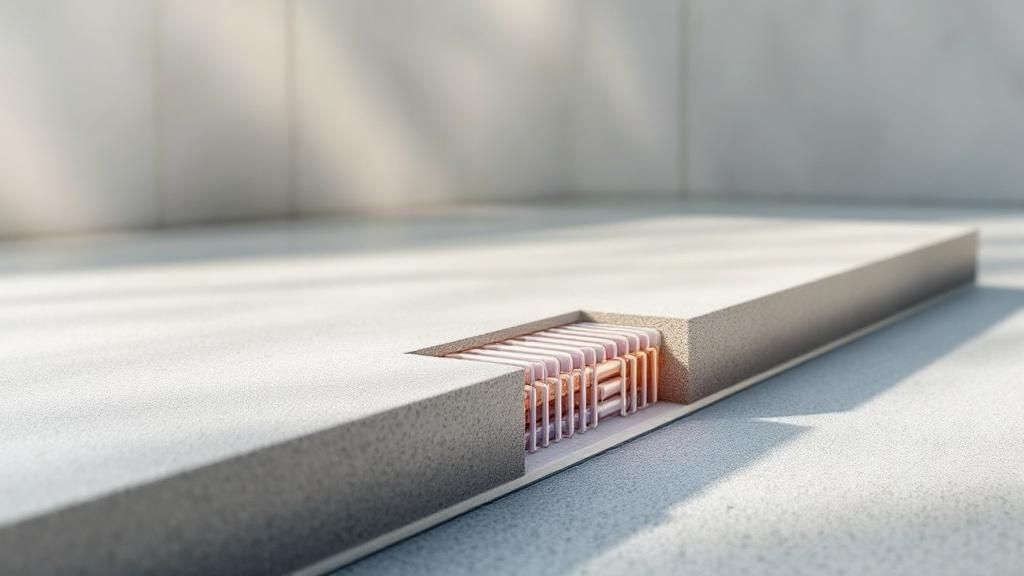
To really get what makes radiant floor heating special, you have to forget everything you know about traditional furnaces. Most homes use convection heat—a furnace heats up air and a blower forces it through ducts and out of vents. This method is notorious for creating drafts, kicking up dust, and leaving you with frustratingly uneven temperatures. Hot spots by the vents, cold corners across the room… sound familiar, Austin?
Radiant heating is different. It works on a much more natural and direct principle: thermal radiation.
Think about the way the sun warms your face on a cool, clear day. Or how you can feel the warmth from a campfire even when you’re sitting several feet away. The heat source isn’t just warming the air in between; it’s sending out invisible infrared waves that directly warm any solid object they strike. That’s the magic of radiant heat.
The Science Behind That Cozy Feeling
In a radiant floor system, whether it’s powered by hot water or electricity, the entire floor of a room becomes one giant, gentle radiator. This massive surface slowly and consistently radiates that infrared energy upward, warming every single thing it touches.
This includes:
- The couch you relax on
- The walls and even the ceiling
- Most importantly, you and everyone else in the room
As these objects absorb the radiant energy, they warm up and begin to radiate a little heat of their own. It creates this wonderful, pervasive warmth that fills the entire space from the ground up, getting rid of those cold spots and drafts for good.
The key thing to remember is this: Radiant systems warm people and objects first, then the air. This is the secret to why it feels so much more comfortable and is far more efficient. It stops wasting energy overheating the air way up at the ceiling and instead delivers warmth right where you are.
Why It Just Feels Better
This is precisely how we experience warmth in nature. Imagine standing in the shade on a cool but sunny afternoon. The moment you step out into the sunlight, you feel instantly warmer, right? The air temperature didn’t suddenly jump, but the sun’s radiant energy hit you directly.
That’s the exact sensation you get from radiant floors. It’s a silent, enveloping comfort that comes from your feet up. For Austin homeowners who want a truly superior level of comfort, understanding this fundamental difference is the first step toward seeing why radiant heat is such a game-changer.
Comparing Electric and Hydronic Systems
Once you’re sold on the idea of radiant floor heating, the big decision comes down to what’s powering it. You’re looking at two main players: electric and hydronic systems. Each has its own strengths, and the best fit for an Austin home really depends on the size of your project, your budget, and what you want to achieve long-term.
Electric systems are the go-to for renovations and smaller, targeted areas. They use thin mats or coils of electric wire installed right under your flooring. It’s like having a sophisticated, low-profile electric blanket for your floor—perfect for taking the chill off a bathroom or kitchen. Need a replacement heating element or thermostat? You can find reliable options at suppliers like Parts Select.
Hydronic systems, by contrast, are more like a full-blown central heating system. They use a boiler or water heater to circulate warm water through a network of PEX tubing laid out under the floor. It’s a more involved setup, but it’s incredibly efficient for heating your entire home.
To make the choice clearer, let’s break down the key differences.
Electric vs Hydronic Radiant Floor Heating
| Feature | Electric Systems | Hydronic Systems |
|---|---|---|
| Best For | Single rooms, additions, and retrofits (bathrooms, kitchens). | New construction and whole-home heating. |
| Upfront Cost | Lower. Materials and installation are less expensive. | Higher. Requires a boiler, pumps, and extensive tubing. |
| Installation | Simpler and faster. Thin mats are easy to roll out. | More complex. Best suited for new builds or major renovations. |
| Operating Cost | Higher. Electricity prices make it more expensive to run long-term for large areas. | Lower. Water is a more efficient medium for transferring heat over large spaces. |
| Heat-Up Time | Fast. Usually heats up in 30-60 minutes. | Slower. Takes longer to bring the entire slab or subfloor to temperature. |
Ultimately, electric systems are fantastic for adding a touch of luxury, while hydronic systems are the workhorse for consistent, efficient, whole-home comfort.
The Nitty-Gritty on Each System
Electric Systems: The Quick and Simple Solution
The biggest draw for electric radiant heat is how easy it is to install and the lower upfront cost. The heating mats are incredibly thin, so they can often be installed in an existing home without having to raise the floor height. This makes them a dream for remodeling projects.
- Best Use Cases: Perfect for retrofitting a chilly primary bathroom or kitchen, or for warming up specific zones like a home office.
- Installation: A much simpler and faster process. You’ll typically just need an electrician for the final hookup.
- Cost: The initial investment in materials and labor is significantly lower than a full hydronic setup.
Hydronic Systems: The Whole-Home Powerhouse
While hydronic systems require a bigger initial investment for the boiler, pumps, and tubing, their real value emerges over time. Pumping hot water is far more cost-effective for heating a large area than running electric resistance wires, which means you’ll see a real difference in your monthly utility bills. For any replacement pumps or valves, check out a trusted supplier like Reliable Parts.
This infographic breaks down some of the key differences in heating systems.
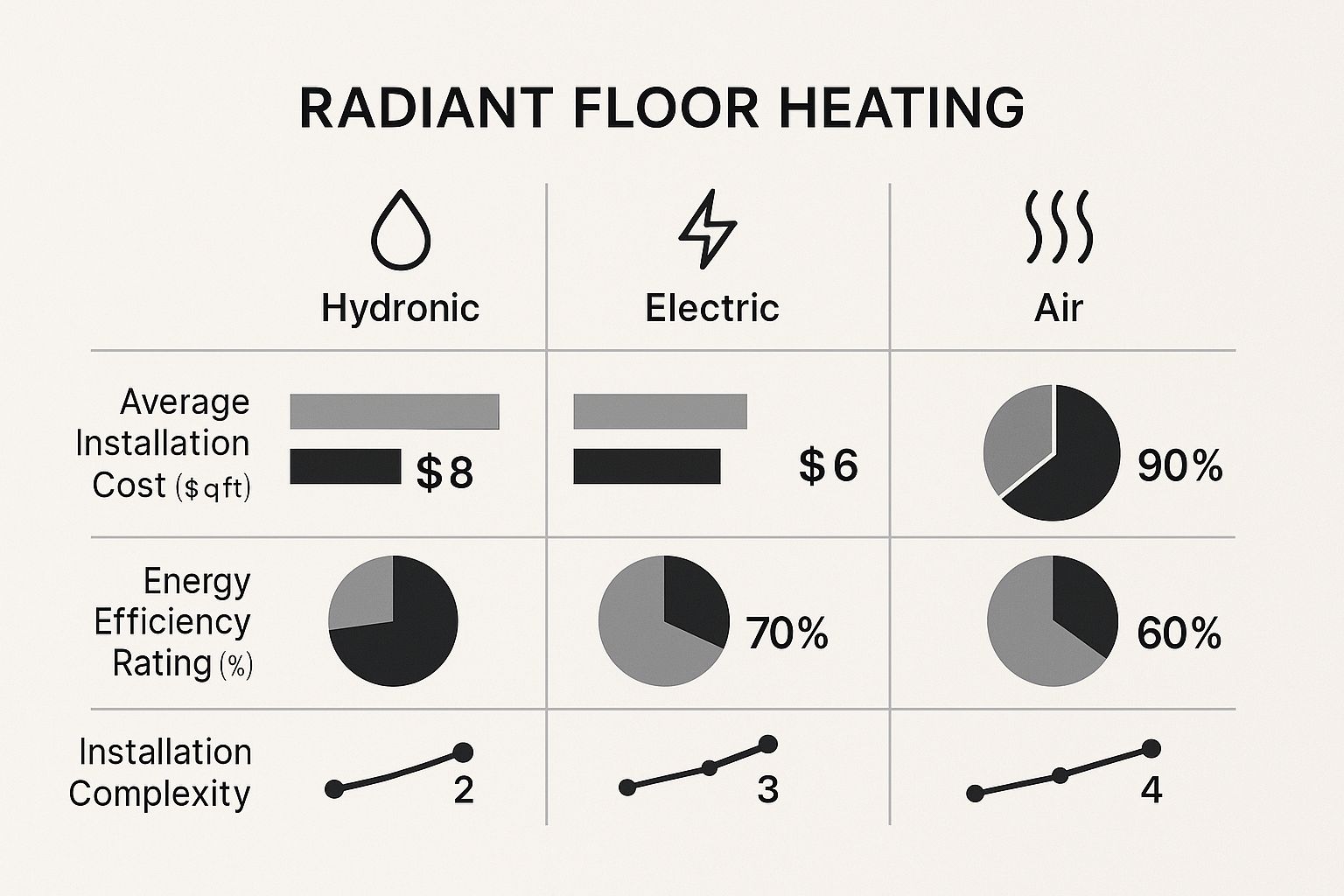
As you can see, the complexity of a hydronic installation is offset by its incredible long-term efficiency, making it the superior choice for heating an entire house.
This move toward efficiency is catching on globally. The radiant electric floor heating market was valued at $1.62 billion in 2024 and is expected to hit $2.12 billion by 2031. That kind of growth shows a clear trend toward smarter, more comfortable heating. You can check out the full market research on radiant electric heating to see the data behind this shift.
Putting in a hydronic system is a major project that ties directly into your home’s plumbing. Before you begin, it’s vital to make sure your home’s infrastructure is up to the task. The team at HomeWise Services provides expert plumbing repair services in Austin, TX, and can ensure your system’s foundation is solid and ready for the upgrade.
What Makes Radiant Floor Heating So Appealing?

So, what’s the big deal with radiant floor heating, beyond just having toasty toes on a chilly morning? The truth is, the advantages are pretty significant, affecting everything from your monthly bills to your family’s health. It’s no wonder homeowners in Austin are looking to these systems for a smarter, healthier, and more modern way to live.
One of the most compelling reasons people switch is the impressive energy efficiency. Think about your typical forced-air system—it loses a ton of heat through all that ductwork, sometimes as much as 25-30% before the warm air even reaches you. Radiant systems don’t have that problem. They deliver warmth directly from the floor up, making them up to 25% more efficient than their ducted cousins. That translates directly to lower energy bills and a smaller carbon footprint.
Cleaner Air for Your Home
Another massive plus is how much better your indoor air quality becomes. Forced-air systems are notorious for blowing dust, pollen, pet dander, and other allergens all over your house every time they kick on. If you have allergies or asthma, it’s a constant battle.
Radiant floor heating is completely different. It works silently without moving any air. This means all those dust particles and allergens stay put instead of being constantly churned up into the air you breathe. The result is a much healthier home, which is a huge benefit here in Austin where seasonal allergies can be a real pain.
By not circulating airborne particles, radiant floor heating creates a cleaner, more stable indoor atmosphere. It’s a choice that supports both comfort and wellness.
Silent, Invisible Comfort
Have you ever had to arrange your furniture around clunky air vents or radiators? It’s a design headache. Radiant systems, on the other hand, are completely hidden and absolutely silent.
Because the entire system is tucked away under your floors, you get total freedom to design your rooms however you like.
- You can place furniture anywhere you want without worrying about blocking a vent.
- You get to enjoy the clean, minimalist aesthetic of uninterrupted walls and floors.
- Your home stays peaceful and quiet without the constant hum of a blower fan.
This blend of silence and invisibility creates a truly luxurious and calming atmosphere. Of course, while a radiant system is incredibly reliable, you want to ensure your entire home comfort system is in top shape. That’s why we offer comprehensive AC repair services in Austin, TX to keep every component running perfectly.
The Ancient History of Radiant Heat

It’s easy to think of heated floors as a modern luxury, something born from recent tech advancements. But the truth is, the idea of warming a home from the ground up is one of the oldest and most effective forms of central heating we have. This isn’t some fleeting trend; it’s a concept that’s been refined and perfected across cultures for millennia.
The fact that radiant heat has such a long and storied past shows just how well it works. It’s a testament to a brilliant, human-focused design that’s been providing reliable comfort long before modern furnaces ever existed.
From Ancient Korea to Imperial Rome
Long before our current engineering, ancient civilizations were already mastering radiant heat. In ancient Korea, they developed the ‘ondol’ system. This ingenious method used a network of flues to pull hot smoke from a stove under the floor, warming the stone slabs from beneath. It was incredibly efficient, providing both heat for the home and a cooking fire all in one.
A little later, the Roman Empire created its own famous version: the hypocaust. This was a sophisticated system where an underground furnace heated air that circulated through a raised floor held up by pillars. Having warm floors in your villa or a public bath was a definitive sign of wealth and a marvel of Roman engineering.
The fact that ancient cultures independently developed radiant floor heating speaks volumes about its effectiveness. They understood that warming the living surface itself creates a superior form of comfort.
Archaeological evidence traces these systems way back. In ancient Korea, floor flues were used for heating as early as 1000 BCE, putting it well ahead of the more famous Roman systems. The Romans perfected their hypocausts around 100 BCE, but the technology largely vanished in Europe after the empire fell, even as it continued to evolve in Asia. You can discover more about the history of radiant heating systems and trace its fascinating global journey.
Need a Hand With Home Repairs in Austin?
Look, things break. Whether you’re excited about a big project like installing radiant floors or just woke up to a broken dishwasher, finding the right help can be a real headache. As Scott MasterTch on JustAnswer and the founder of HomeWise Services, I’ve built my career around making home repair simple and trustworthy for homeowners.
Option 1: Instant DIY Help on JustAnswer
If you’re the type who likes to tackle things yourself but just need a little expert guidance, you can connect with me, Scott MasterTch, on JustAnswer. I’ve already walked over 1,500 people through their own home repairs, giving them the clear, step-by-step advice they needed to get the job done right. It’s fast, remote, and perfect for those DIY moments.
Heads Up: You can try JustAnswer for just $5, but be sure to cancel within 7 days via “My Account” > “Membership” > “Cancel membership” or by emailing [email protected] to avoid monthly fees.
Option 2: HomeWise’s Local Austin Concierge Service
For those times when you need a professional to handle the job from start to finish here in Austin, my company, HomeWise Services, offers something pretty unique: a $20 concierge service. Think of it as your personal home repair advocate.
Here’s what that looks like:
- Personal Diagnosis: You and I will hop on a call so I can personally troubleshoot the issue with you and figure out exactly what’s going on.
- The Right Parts, Every Time: I’ll point you to the exact parts you need from trusted suppliers like RepairClinic or Sears PartsDirect, taking all the guesswork out of it.
- White-Glove Scheduling: I’ll then connect you with a top-notch, vetted local technician from my network to perform the repair.
We’re here to bridge the gap between a quick question and a full-blown service call, making sure you always have a trusted path forward.
Being part of the Austin community is important to us. That’s why a portion of all proceeds from HomeWise Services goes directly to the Texas Amputee Golf and Wellness Foundation. We’re proud to support an organization that does so much for the great people in our state. No matter your situation, you’re never left on your own.
Common Questions About Radiant Floor Heating
After guiding countless Austin homeowners through these projects, I’ve heard just about every question you can imagine. People are naturally curious about the cost, the installation process, and how these systems hold up over time. It’s a big upgrade, so getting clear answers is the first step.
Let’s walk through some of the most frequent questions I get, so you can feel confident about deciding what’s right for your Austin home.
Can I Install Radiant Heating Under My Existing Floors?
In many cases, the answer is a resounding yes! Retrofitting is most practical with electric radiant systems. These use incredibly thin mats that can often slide right under tile, laminate, or engineered wood without creating an awkward step-up in your floor height.
Hydronic systems are a different beast. Because they involve running tubes of hot water, they’re much more involved to retrofit and are usually reserved for new builds or major gut renovations. For advice tailored to your specific floors, you can always describe your situation to me on JustAnswer or book a HomeWise concierge call for a local Austin perspective.
Is Radiant Floor Heating Expensive to Run in Austin?
This really depends on the system you choose, how well-insulated your house is, and what you’re paying for utilities. As a rule of thumb, hydronic systems tend to have lower running costs than electric ones, especially if you’re heating a large space.
The good news is that all radiant systems are champs when it comes to energy efficiency. They heat you and the objects in the room directly, so you don’t lose a bunch of heat through leaky ducts like you do with traditional forced-air systems. That efficiency usually translates to smaller heating bills. Just be sure to pair it with a programmable thermostat to really maximize those savings.
What Kind of Maintenance Does This System Require?
One of the best things about radiant heat is how little you have to think about it. Electric systems have no moving parts, making them pretty much maintenance-free.
Hydronic systems need a little more attention. You’ll want to have the boiler and pumps checked out periodically—much like any standard boiler system—just to make sure everything is running smoothly and efficiently.
Expert Insight: If you ever notice something seems off with your system’s performance, HomeWise Services can pinpoint the problem and schedule maintenance here in the Austin area. For a quick question or some fast troubleshooting, JustAnswer is a great first stop.
How do I avoid JustAnswer’s monthly fees?
JustAnswer offers a great trial period where you can get expert advice for a small fee (like $5). To avoid being charged the full monthly membership fee, you must cancel your trial within the specified period (usually 7 days). You can do this by logging into your account, navigating to “My Account,” then “Membership,” and selecting “Cancel membership.” You can also email their support team at [email protected] for help.
Whether you’re tackling a complex project like radiant heating or just need a simple fix, don’t go it alone. HomeWise Services is here to bring reliable, professional help to your Austin home. Book your $20 concierge call today and let’s get it sorted. Every booking helps support the Texas Amputee Golf and Wellness Foundation.
 HomeWise Services by Master Tech Scott
Leave a comment