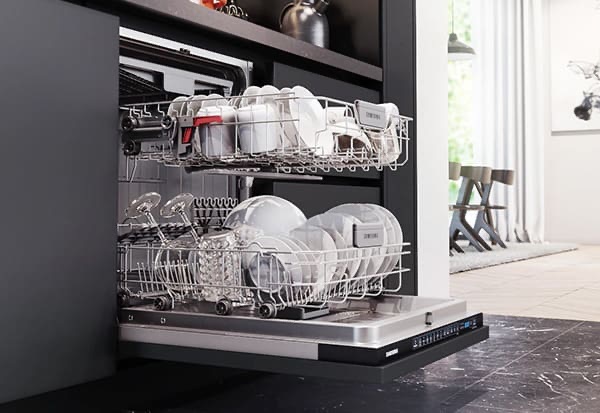
If your Samsung dishwasher finished a cycle and you opened the door to a puddle in the tub, you are not imagining it. In San Antonio, that standing water is one of the calls I run most often on Samsung kitchens—especially after a weekend of cooking, or after months of our hard water quietly coating the filter.
I’m Master Tech Scott with HomeWise Services. By day I am in kitchens and laundry rooms from Spring Branch to the South Side. On JustAnswer I am in those same rooms remotely, walking homeowners through a Bosch rack that scrapes, a Traulsen that quit cooling, an office ice machine that sounds like a blender full of bolts, and a GE dishwasher that went dark after a flicker. Same job, different door. This guide is the Samsung drain problem I see most—and the line between a safe homeowner fix and a truck roll.
This article covers homeowner-safe diagnosis for a Samsung dishwasher that will not drain, leaves standing water, or shows a 5C / 5E / SC / SE drain code. It does not cover live-voltage board testing, sealed pump tear-down, or refrigerant work on other appliances.
Quick Answer
A Samsung dishwasher that will not drain in San Antonio is usually blocked at the filter, the drain hose, or the garbage disposal—not a dead machine. Clean the cylindrical filter at the bottom of the tub, run the disposal for 30 seconds, confirm the drain hose has a high loop under the sink, then power-reset the unit. Call a tech if you hear the pump hum with no movement, see water under the dishwasher, or get an LC / LE leak code.
Why Do Samsung Dishwashers Stop Draining in San Antonio Homes?
Samsung dishwashers use a drain pump—a small motor that pushes wastewater out of the sump (the basin under the filter) and into the kitchen drain. When the control board runs that pump and the water level sensor still sees water afterward, the display throws a drain error.
In most service calls I run here, the pump itself is fine. South Texas water and kitchen habits do the damage first.
Common local causes I see:
- Packed filter and sump. Rice, pasta, coffee grounds, and bone chips pack the coarse filter and fine mesh. Hard-water minerals then glue that debris in place.
- Hard-water scale. SAWS-area water is mineral-heavy. Calcium builds on spray-arm jets and around the filter housing until water cannot reach the pump.
- Garbage disposal backup. Food in the disposal, or a knockout plug left in after a new disposal install, stops the dishwasher from emptying.
- Kinked or crushed drain hose. The hose gets pinched when the unit is pushed back under the cabinet—very common after a floor or sink remodel.
- Missing high loop or clogged air gap. Without a high loop (the drain hose arched up under the counter), sink water can flow backward into the tub.
- Jammed drain-pump impeller. A shard of glass or a seed lodges in the impeller. The pump hums; water stays put.
Whirlpool, Maytag, LG, GE, KitchenAid, and Bosch dishwashers fail the same way when the drain path is blocked. Samsung’s display just names the problem more clearly.
What Does a Samsung 5C, 5E, or OC Error Code Mean?
5C, 5E, SC, or SE means the dishwasher tried to drain and still detected water. That is a drain-path problem, not a “replace the whole unit” problem.
OC, 0C, or oE means overflow—too much water in the tub. That can follow a failed drain, a stuck fill valve, or a backed-up house drain.
LC or LE means the leak sensor in the base pan got wet. Do not keep running cycles if you see this code. Check under the unit for water first.
4C or 4E is a water-supply error (not filling): closed shutoff, kinked inlet hose, or low pressure.
Write the exact code down before you reset anything. That code is the first thing I ask for on a Samsung repair San Antonio call.
How Do I Safely Check a Samsung Dishwasher That Will Not Drain?
Safety first. Kill power at the wall switch or unplug the unit. If you cannot reach the plug, flip the dishwasher breaker. Do not put your hand in the sump while the machine is powered. Do not drag the unit out if you see standing water on the floor—that is a leak, not a DIY filter job.
- Cancel the cycle and note the code. Press and hold Start until the display clears, or use Cancel. Photograph the code if it returns.
- Look in the sink and run the disposal. If the sink is slow, the house drain is the problem, not the dishwasher. Clear the disposal. If a disposal was just installed, confirm the dishwasher inlet knockout plug was removed.
- Remove and clean the filter. Pull the lower rack. Twist the cylindrical coarse filter counterclockwise and lift it out, then lift the fine mesh screen under it. Rinse both in the sink. Use an old toothbrush on the mesh. Hard-water crust comes off with warm water and a little white vinegar—no metal scrapers.
- Check the sump by eye. With the filter out, look into the basin. Remove any glass, seeds, or label glue you can see. Do not pry at the pump with a screwdriver.
- Confirm the drain hose high loop. Under the sink, the dishwasher drain hose should rise as high as practical under the counter before it drops into the disposal or air-gap fitting. A hose lying flat on the cabinet floor invites backflow.
- Look for a pinched hose. Shine a light behind the dishwasher without dragging it out if the floor is wet. A sharp bend or a unit sitting on its own hose will stop drainage cold.
- Power-reset the control. Restore power. Some Samsung panels clear a false drain code after a 60-second unplug. Run a short cycle and watch the first drain.
Bold tip: If the pump hums and the water level does not drop within a minute, stop the cycle. That is impeller or pump territory, not another filter rinse.
How Do I Reset a Samsung Dishwasher After a Drain Error?
A reset does not fix a clog. It only clears a latched code so you can test the machine.
Unplug the dishwasher or flip its breaker for one full minute. Plug it back in, cancel any leftover cycle, and start a short or rinse cycle with no dishes. If 5C returns immediately, the sensor still sees water—go back to the filter and hose before you assume the board failed.
Child lock can look like a dead panel. If buttons do nothing, check the fascia for a lock icon and hold the lock combination printed on the console (often about three seconds on the marked button).
What These JustAnswer and Field Calls Look Like in Real Life
The Samsung drain job is the spine of this post because it is the one homeowners can often finish themselves. The rest of the day is a reminder of when not to keep turning screws.
A Bosch owner messaged because the upper rack was colliding with the lower rack. That was not a broken lift motor. We opened her manual, found the rack-height stops on the guide rails, and she raised the top rack so the wheels sat in the taller position. Two minutes, zero parts.
A Traulsen refrigerator that was not cooling was the opposite. Commercial boxes hide the evaporator and the defrost circuit behind panels. I sent that one straight to a tech. Warm product and a sealed system are not a “pull the kickplate and hope” job.
An office ice machine—compact unit, about a year old—came in as a horrible grinding noise and no ice. At that age, warranty exchange is the first call. If the maker will not stand behind it, a cheap noisy cube maker is often not worth a full rebuild. Junk it and put the money into a serviceable machine.
A GE dishwasher that would not turn on after a brief power flicker was not a drain clog. The control board had given up. After a flicker, a homeowner can reset the breaker and wait a minute. If the panel stays dark or half-lit with no click from the door latch, stop. That is licensed diagnostic work.
Then there is the truck work. A homeowner in Spring Branch called about an LG front-load washer. The door boot—the rubber gasket between the door and the tub—had gone dingy and corroded from residue and hard water. She wanted the boot replaced and a real self-clean cycle run after the new seal went in. That is the right order: new gasket first, then clean, or you just bake old biofilm onto a fresh part.
Same metro, same hard water, same rule: fix the easy path, do not guess at the expensive one.
What Maintenance Actually Prevents Another 5C in South Texas?
Hard water and grease do not take months off. They take weeks.
- Clean the filter every two to four weeks in a busy kitchen. Once a month is the bare minimum in San Antonio.
- Scrape plates. You do not need to pre-wash, but rice, coffee grounds, and meat fat do not belong in the sump.
- Keep rinse aid filled. It helps sheeting and cuts mineral film on glass.
- Run the Self Clean cycle monthly with a dishwasher cleaner or a cup of distilled white vinegar on the upper rack—no detergent in that cycle.
- Pull the lower spray arm occasionally and poke the jets clear with a wooden toothpick. Scale closes those holes and the machine “washes” with a weak spray, then leaves soil in the filter.
- Set the water heater so hot water at the sink is about 120°F before you start a cycle. Cold fill water plus hard minerals equals cloudy glasses and a dirty tub.
If the dishwasher keeps filming glasses after you clean it, the problem is often whole-house hardness, not a broken spray arm. That is the same mineral load that scales water heaters, ice makers, washer door boots, and irrigation heads.
When Should I Call a Repair Tech?
Stop DIY and book Samsung repair San Antonio help if any of these show up:
- Water on the floor or an LC / LE leak code
- Pump is silent, or it hums and never moves water
- 5C returns after a clean filter, a clear disposal, and a confirmed high loop
- Burning smell, tripped breaker, or a hot junction box under the sink
- Door will not latch, or the unit fills and immediately drains in a loop
- The panel stays dead after a power flicker
- You recently remodeled and the unit was slid back onto its hose
A licensed tech can test the drain pump, check valve, water-level sensor, and leak tray without guessing. Homeowners should not cut the access panel and probe live connectors.
I had a Stone Oak call where the homeowner had already cleaned the filter twice. The 5C kept coming back. The disposal was clear. The real issue was a drain hose crushed flat against the cabinet side after a flooring crew pushed the unit in. Ten minutes of hose routing, no new parts, and the machine drained on the first test cycle. That is the kind of miss that looks like a “bad pump” until you look.
FAQ
Why is there standing water in the bottom of my Samsung dishwasher?
Standing water after a cycle almost always means the drain path is blocked or the pump could not finish. Start with the filter, the disposal, and the high loop under the sink. If those are clear and the pump only hums, the impeller or pump needs service.
How do I clear a Samsung dishwasher 5C error in San Antonio?
Clean the filter, clear the disposal, confirm the drain hose is not kinked, then power-reset the unit for one minute. The 5C code means the machine still saw water after a drain attempt. If the code returns with a clean path, schedule appliance repair near me San Antonio rather than replacing parts blind.
Can hard water make a Samsung dishwasher not drain?
Yes. Mineral scale binds food debris to the filter and spray arms so water cannot reach the pump. San Antonio and South Texas hardness makes this worse than in soft-water cities. Monthly filter cleaning and a Self Clean cycle prevent most of the drain calls I see.
Is it safe to run the dishwasher with water in the tub?
No. Standing water goes stale, the leak sensor can trip, and another fill can overflow. Cancel the cycle, remove the water you can with a cup and towel after power is off, then fix the drain path before the next run.
Do I need a new drain pump if I hear a humming sound?
Not always. Humming with no water movement often means a jammed impeller or a crushed hose, not a burned motor. Do not tear the pump apart. A tech can pull the sump cover, free debris, and test the pump without replacing a good part.
Should I call a plumber or an appliance tech?
Call a plumber if the kitchen sink itself is slow or backed up. Call an appliance tech if the sink drains fine and only the dishwasher holds water, shows 5C, or leaks from the base. HomeWise handles both sides when the problem sits at the connection.
Liberty Home Guard and Peace of Mind
A dishwasher pump, a GE control board after a flicker, or an LG door boot is not the surprise you want on a random Tuesday. Liberty Home Guard is a home-warranty option that transfers some of that repair risk off your credit card and onto a service plan. HomeWise Services is a preferred local service provider, which means if a covered claim is approved, you are not rolling the dice on a stranger who has never seen a Samsung WaterWall sump or a front-load boot.
A warranty is not a substitute for filter cleaning. It is the backstop when the part that fails is the expensive one.
Get the Dishwasher Empty—and Keep the Rest of the House Working
If the safe checks above did not clear the standing water, book a visit and I will diagnose it on site. Same kitchen often has a slow sink trap, a scaled ice maker, or a washer gasket that is next. HomeWise also handles plumbing, irrigation, and epoxy coatings when the job is really about home resilience—hard water, heat, and wet floors—not just one appliance.
Book service: https://homewise-services-100453.square.site
Need a fast second set of eyes before a tech arrives? You can reach me on JustAnswer as Master Tech Scott.
Drop your model number and the exact code or symptom in the comments. I will tell you whether you are still in DIY territory or whether it is time to roll a truck.
Related reading: Samsung refrigerator not cooling in San Antonio heat · When a garbage disposal backup takes out the dishwasher
Master Tech Scott | HomeWise Services – San Antonio’s Trusted Appliance Repair Expert


Leave a Reply