
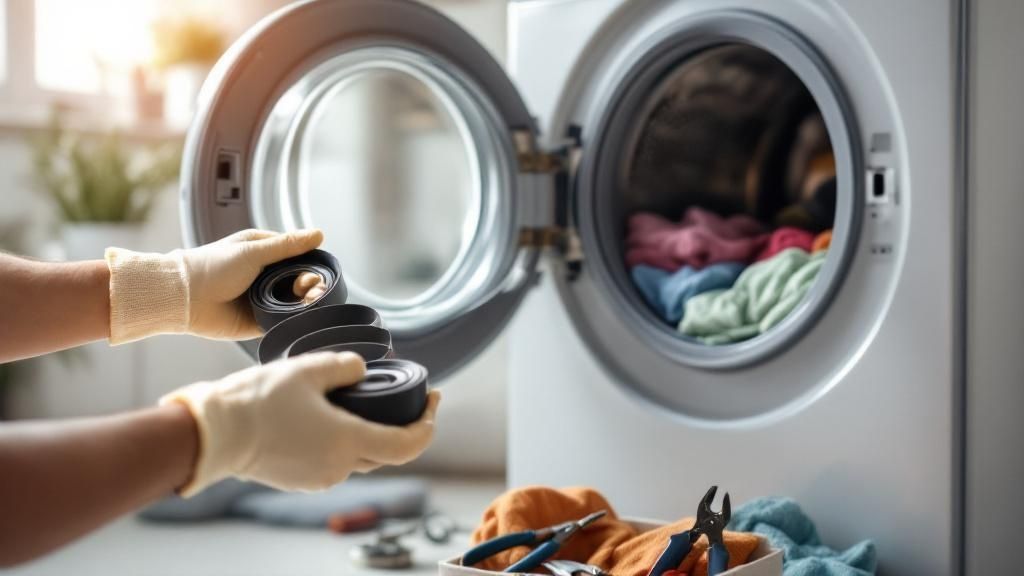
It’s a feeling every Austin homeowner dreads: you open the washing machine expecting clean clothes, but instead, you find a sopping wet mess. The machine filled, it washed, but it never spun. This little hiccup can throw your whole day off track, but don’t panic. Before you assume you need a costly repair, know that the fix is often surprisingly simple, ranging from an unevenly distributed laundry load to a clogged drain pump.
Stuck with a broken appliance and not sure where to start? HomeWise Services offers a unique solution for Austin residents. For a flat $20 fee, our concierge service connects you with a master technician who can personally troubleshoot your issue, recommend the right parts, and even schedule a white-glove repair service. It’s the expert help you need without the guesswork. Prefer to tackle it yourself? This guide will walk you through the most common causes and fixes for a washer that won’t spin.
Understanding Why Your Washer Won’t Spin

When your washer refuses to spin, it’s not just being stubborn. It’s usually a self-preservation tactic. Modern machines are packed with sensors designed to shut down the cycle if something’s wrong, preventing serious damage. Figuring out what triggered that shutdown is the key to knowing whether you’re looking at a quick DIY fix or a job for a pro.
This guide will walk you through the most common culprits, starting with the easy stuff you can check yourself. We’ll cover the issues that plague both top-load and front-load models before getting into the more complex mechanical or electrical faults that often require professional appliance repair in Austin.
Common Culprits Behind a Non-Spinning Washer
Before you start taking things apart, it helps to know what you might be looking for. In my experience as a master technician, it almost always comes down to one of these four issues:
- Load Imbalance: This is, without a doubt, the #1 reason a washer won’t spin. If heavy items like towels or jeans get clumped on one side, the drum gets thrown off balance. The machine will stop itself to avoid a violent, wall-shaking spin cycle.
- Drainage Problems: A simple rule of thumb: a washer that can’t drain won’t spin. It’s a safety feature to prevent a flood. A clog in the drain pump or the hose is often the villain here.
- Faulty Lid Switch or Door Lock: This is another crucial safety mechanism. If the machine doesn’t get the “all clear” signal that the lid is shut and locked, it will refuse to spin. No exceptions.
- Mechanical Failures: Parts wear out. Over years of use, things like a drive belt or a motor coupling can stretch, fray, or break entirely, leaving the drum powerless.
For anyone in the Austin area, a quick diagnosis means getting your laundry day back on schedule. If you feel like you’re in over your head, that’s where HomeWise Services comes in.
For just $20, connect with a HomeWise master technician to troubleshoot your appliance, get part recommendations, and schedule a white-glove repair in Austin, TX. Book now.
This guide is here to give you the confidence to tackle the problem yourself, but it’s good to know that expert help is always just a click away.
Before you start dreading a hefty repair bill or pricing out a new washer, just take a deep breath. More often than not, the reason your washing machine won’t spin is something surprisingly simple—and totally fixable in just a few minutes, no tools required.
Let’s walk through the basic checks every homeowner should do first.
Quick Diagnostic Checklist For a Non-Spinning Washer
Sometimes, the simplest explanation is the right one. Before you dive into the nitty-gritty of appliance repair, this quick table can help you rule out the most common (and easiest to fix) culprits that stop a washer from spinning.
| Potential Cause | What to Check | DIY Solution |
|---|---|---|
| Unbalanced Load | Are clothes, especially bulky items, clumped to one side? | Open the lid and manually redistribute the laundry evenly. |
| Power Issue | Is the washer plugged in firmly? Is the breaker tripped? | Check the plug and outlet. Go to your breaker box and reset the washer’s circuit. |
| Wrong Cycle | Is a “Soak” or “Delay Start” setting accidentally selected? | Cancel the current cycle and select a “Drain & Spin” or “Rinse & Spin” cycle. |
| Lid/Door Not Shut | Is the lid or door completely closed and latched? | Open the door and close it again firmly, listening for a click. |
If you’ve run through these initial checks and the drum still isn’t moving, it’s time to look a little closer at the machine’s safety features.
Unbalanced Load: The Number One Culprit
This is, by a long shot, the most common reason a modern washing machine stops dead before the final spin. Your washer has built-in sensors to detect when the drum is off-kilter. If it senses a lopsided load, it shuts down the cycle to prevent the violent shaking that can damage the machine. It’s a smart safety feature that often gets mistaken for a malfunction.
This usually happens when you’re washing a single, heavy item like a comforter, a bathmat, or a bunch of towels that have all migrated to one side of the drum.
The fix is easy. Just pop the door open and rearrange the wet clothes to be more evenly distributed. For really big loads, you might even need to pull one or two heavy items out. Once you’re done, just select the “Drain & Spin” cycle to finish the job.
Power and Settings: The “Duh” Moment Checks
It might sound almost too obvious, but you would be shocked at how often the problem is just a simple electrical hiccup or a mistaken setting. A plug that’s been jostled loose or a tripped circuit breaker can easily cut power right when the spin motor needs it most.
This simple visual guide walks you through the power and settings checks you should always perform first.

As you can see, diagnosing the issue is often a process of elimination, starting with the easiest fixes.
The Lid Switch or Door Lock: A Critical Safety Check
Another key safety feature is the lid switch on top-loaders or the door lock assembly on front-loaders. For your safety, the machine is programmed not to spin unless it gets a clear signal that the door is securely shut and locked. If that switch is faulty, or if gunk and grime are preventing the lock from engaging, the washer will refuse to start its spin cycle.
Pro Tip: When you close the door, listen for a solid “click.” If you don’t hear it, or if the “Door Locked” light on the panel doesn’t come on, that switch assembly is your prime suspect.
These first few checks are free and often solve the problem right away. While you’re in troubleshooting mode, it’s a good reminder that our home appliances are complex systems. Just like a tiny switch can stop a washer, small issues can cause big problems elsewhere, especially during Austin’s hot summers. Making sure your HVAC is ready is essential. You can learn more by checking out our guide on AC repair in Austin, TX. If these simple DIY steps haven’t gotten your washer spinning again, it’s time to dig a bit deeper.
Identifying Common Mechanical Failures

Alright, so you’ve checked for an unbalanced load and made sure the door lock is clicking shut, but the drum is still dead in the water. This usually means it’s time to look a little deeper, at the machine’s mechanical guts.
The spin cycle is easily the most intense part of a washer’s job. All that force and vibration puts a ton of stress on the internal components. It’s only natural that over time, some of those hardworking parts are going to wear out.
In fact, a comprehensive German durability study found that 6–7% of washing machines fail within the first two years, with mechanical stress being a major culprit. The constant vibrations from the spin cycle are especially tough on parts like the motor and drive belt. If you’re curious about the nitty-gritty details, you can read more about these durability findings and see what makes these appliances tick—or stop ticking.
The Drive Belt and Motor Coupling
One of the most common points of failure I see is the drive belt. This is a big rubber belt, usually in top-loaders and some front-loaders, that connects the motor to the drum. After years of spinning heavy, wet loads, that belt can stretch, start to fray, or just snap in two.
If you hear the motor whirring away but the drum isn’t budging, a busted belt is a strong possibility. To check it out, you’ll need to unplug the washer and get access to the back or bottom panel. A quick look will tell you if the belt is hanging loose, looks damaged, or is completely broken. If so, it’s time for a new one.
Now, if you have a direct-drive washer, you won’t find a belt. Instead, a small plastic or rubber part called a motor coupling connects the motor to the transmission. This little piece is actually designed to fail—it’s a sacrificial part. It breaks under extreme strain (like from a massively overloaded tub) to protect the far more expensive motor and transmission from damage.
Expert Insight: A tell-tale sign of a broken motor coupling is finding little bits of black rubber or white plastic shavings inside the washer’s cabinet. If you see that “evidence,” you’ve almost certainly found your problem.
The Clutch Assembly
Another part that takes a beating, especially in top-load machines, is the clutch assembly. Just like the clutch in a manual car, it engages the transmission to get the tub spinning up to speed smoothly.
Over time, the pads on the clutch wear thin from all that friction. When they’re worn out, the washer might spin really slowly, struggle to get going, or not spin at all. You might even hear a grinding sound or notice a distinct burning smell during the spin cycle.
The good news is that replacing these parts is often a totally manageable DIY job if you’re feeling handy. You just need some patience and the right replacement part for your specific model. Still not sure which part is the culprit? For just $20, our concierge service provides personalized advice from a master technician, part recommendations, and white-glove repair scheduling in Austin.
If you’re up for the challenge, you can find the exact drive belt, motor coupling, or clutch you need from online retailers like RepairClinic or Sears PartsDirect. Just be sure to have your washer’s model number ready before you start shopping.
What to Do When Drainage or Electronics Stop a Spin Cycle

If you’ve checked the simple stuff and the mechanical parts look okay, it’s time to dig a little deeper. Your focus should now shift to two other critical systems: the drainage and the electronics.
Every modern washer has a non-negotiable safety rule: it absolutely will not start the high-speed spin cycle until it senses all the water is gone. If it can’t drain, it won’t spin. Simple as that.
At the same time, the machine’s electronic control board—its brain—is the boss of every single operation. One little glitch in that board can stop a spin cycle cold, even when every mechanical part is in perfect shape. Let’s walk through how these two systems might be causing your laundry day headache.
The Critical Role of Proper Drainage
When a spin cycle just won’t kick in, the first question I always ask is, “Is there still water sitting in the drum?” If you peek inside and see a puddle, you’ve almost certainly got a drainage problem on your hands. This usually boils down to one of two things.
- Clogged Drain Hose: That flexible hose snaking from the back of your washer to a standpipe or sink is a prime spot for clogs. Over time, lint, gunk, and small debris can build up and create a blockage. Sometimes it just gets kinked behind the machine.
- Malfunctioning Drain Pump: This little pump is the muscle that actively pushes water out of the machine. If it gets jammed up with a stray sock, a coin, or a clump of lint, that water isn’t going anywhere. The pump’s motor can also just burn out from age.
A great way to diagnose a bad pump is just to listen. When the machine is supposed to be draining, you should hear a definite humming or whirring sound. If all you get is silence, a loud grinding noise, or a faint, sad buzz, that pump is your prime suspect.
You can often fix this by unplugging the washer, getting access to the pump, and clearing out whatever is stuck in there. If the pump itself has died, a replacement from a reputable supplier like Parts Select is the next move.
A backed-up drain pump can sometimes point to a bigger issue beyond the washer itself. If you’ve cleared the hose and pump but water still isn’t draining away, you might have a clog further down the line. For folks in our area, we offer services for all your home’s systems. You can learn more about our professional plumbing repair in Austin, TX.
When the Machine’s Brain Fails
So, what if the washer drains perfectly but still sits there stubbornly refusing to spin? Now, we start looking at the electronics. The main control board (or sometimes a separate motor control board) is giving all the orders. A power surge, a bit of moisture, or just old-fashioned component failure can scramble its circuits. This leads to one of the most frustrating and tricky issues to pin down.
And it happens more than you’d think. In fact, research analyzing thousands of appliance repairs found that electronic malfunctions are a major reason washers stop spinning, often leading to people giving up and buying a new one. The data, which you can discover more about here, shows how critical these electronic boards really are.
Honestly, diagnosing a bad control board is tough without the right tools and experience. This is one of those times where getting an expert opinion can save you a ton of time and money.
- Want instant expert advice? You can connect with certified appliance techs 24/7 on JustAnswer for fast, reliable help.
- Need a definitive diagnosis? For Austin homeowners, our $20 concierge service connects you directly with a master technician who can pinpoint the exact problem and recommend the right appliance parts for your Austin home.
Knowing When to Call for Expert Help in Austin
You’ve done everything you can. You balanced the laundry, you made sure the drain hose wasn’t kinked, you even listened for the tell-tale click of the lid switch. But the washer just sits there, a silent, water-logged lump.
This is the moment every DIYer faces. It’s that tipping point where your good intentions could accidentally turn a manageable problem into a major, expensive mess.
Diving into a machine’s transmission, trying to replace seized drum bearings, or deciphering a cryptic error code on a control board aren’t your average weekend projects. These are complex jobs. Pushing ahead without the right training and specialized tools can lead to cracked tubs, fried electronics, or worse—a flooded laundry room and personal injury.
Sometimes, the smartest tool you can use is the phone. Knowing when to step back is a skill in itself.
Get an Expert Diagnosis Without the Full-Service Price Tag
For our neighbors here in Austin, we wanted to offer a better option than just guessing. Instead of committing to a full repair visit right away, what if you could get a definitive diagnosis from a master technician first? That’s exactly why we created our $20 HomeWise Concierge Service.
For just $20, you get on a call directly with an expert who can:
- Walk you through advanced diagnostics over the phone, safely and step-by-step.
- Help you pinpoint the exact failed part, so you don’t waste money on components you don’t need.
- Give you the right part numbers and point you toward trusted suppliers like RepairClinic or Sears PartsDirect.
- Seamlessly schedule a white-glove repair service if it turns out the job is bigger than you want to tackle.
It’s a low-risk way to get a clear, professional opinion and understand exactly what it’ll take to get your washer spinning again. Fix your washer with HomeWise’s concierge service or JustAnswer. Book a white-glove repair now: Schedule here.
Your Options for a Professional Fix
When you’re dealing with a complicated repair, guessing is not a strategy. For those in the Austin area, we make getting professional help completely straightforward. You can book our top-tier appliance repair in Austin, TX, and one of our skilled technicians will take care of everything from start to finish. Our white-glove approach ensures a hassle-free experience, a commitment we extend to our community by supporting the Texas Amputee Golf and Wellness Foundation with a portion of our proceeds.
If you just need a quick second opinion before you decide what to do, expert advice is available 24/7. Want instant answers? Connect with experts on JustAnswer for fast, reliable help.
In the end, whether your washing machine is not spinning because of a simple sock in the drain pump or a major motor failure, you don’t have to figure it out alone.
Common Questions About Washer Spin Problems
When your washing machine decides to stop spinning, you’re suddenly faced with a mountain of soggy laundry and a ton of questions. As a team that’s helped countless Austin homeowners with this exact problem, we’ve heard them all. Here are the answers to the most common questions we get, so you can figure out your next move.
Can I Actually Fix a Non-Spinning Washer Myself?
You absolutely can. In fact, a good chunk of the time, the fix is something you can knock out in just a few minutes with zero special tools. If your machine is just off-balance or has a small clog in the drain pump filter, that’s a perfect DIY job. It’s one of the first things we’d check.
But, and this is a big but, the story changes when you’re looking at a more serious mechanical or electrical issue. Trying to tackle a drive belt, clutch assembly, or the main control board without experience can turn a manageable repair into a complete nightmare.
This is exactly why we offer our $20 HomeWise Concierge Service. You can chat with a master technician who will walk you through troubleshooting safely. We’ll help you figure out if it’s a quick fix you can handle or if it’s time to call in a pro.
What’s a Washer Spin Repair Going to Cost Me in Austin?
Repair costs here in Austin can be all over the map—it really depends on what’s broken. A simple fix, like replacing an easy-to-reach lid switch, might only set you back $20 to $40 for the part, plus a pretty standard labor charge.
However, if you’re dealing with a major component failure, that’s a different financial picture. A bad transmission, a seized main motor, or shot drum bearings can easily run into several hundred dollars.
That’s why our $20 concierge service is such a no-brainer first step. Before you even think about booking a full service call, we’ll give you an expert diagnosis and a realistic cost estimate. You’ll know exactly what you’re up against and can budget accordingly.
Should I Fix My Old Washer or Just Buy a New One?
This is the million-dollar question for any appliance that’s getting up there in years. The right answer comes down to three things: the machine’s age, its brand and reliability, and what the repair is going to cost.
We always share the 50% rule with Austin homeowners. It’s a solid rule of thumb: If the total repair cost is less than half the price of a similar new washing machine, fixing it is usually a smart financial move. A well-cared-for machine from a good brand can easily give you more than a decade of service.
On the flip side, if your washer is older and this isn’t its first rodeo with repairs, you might be better off putting that money toward a new, more efficient model. Our technicians can give you a straight, unbiased opinion to help you make the best call. Want instant expert advice? Try JustAnswer for fast, reliable help.
Where Can I Find the Right Washer Parts in Austin?
Hunting down the exact part for your specific washer model can feel like a wild goose chase. Local appliance part stores are out there, but their stock can be hit-or-miss.
We usually point people toward trusted online suppliers that are pros in appliance parts. They have huge inventories and search tools that make it easy to find what you need. Some of our go-to’s are:
- RepairClinic
- Sears PartsDirect
- Parts Select
The real challenge, though, is being 100% sure which part is the problem. Guessing gets expensive fast. If you’re not positive what you need to order, our concierge service can nail down the exact part number for your model. It’ll save you time, money, and the headache of returning the wrong component.
When you just need a clear answer and a path forward, HomeWise Services is here to help. Get expert diagnosis and personalized repair advice with our $20 Concierge Service.
Leave a Reply